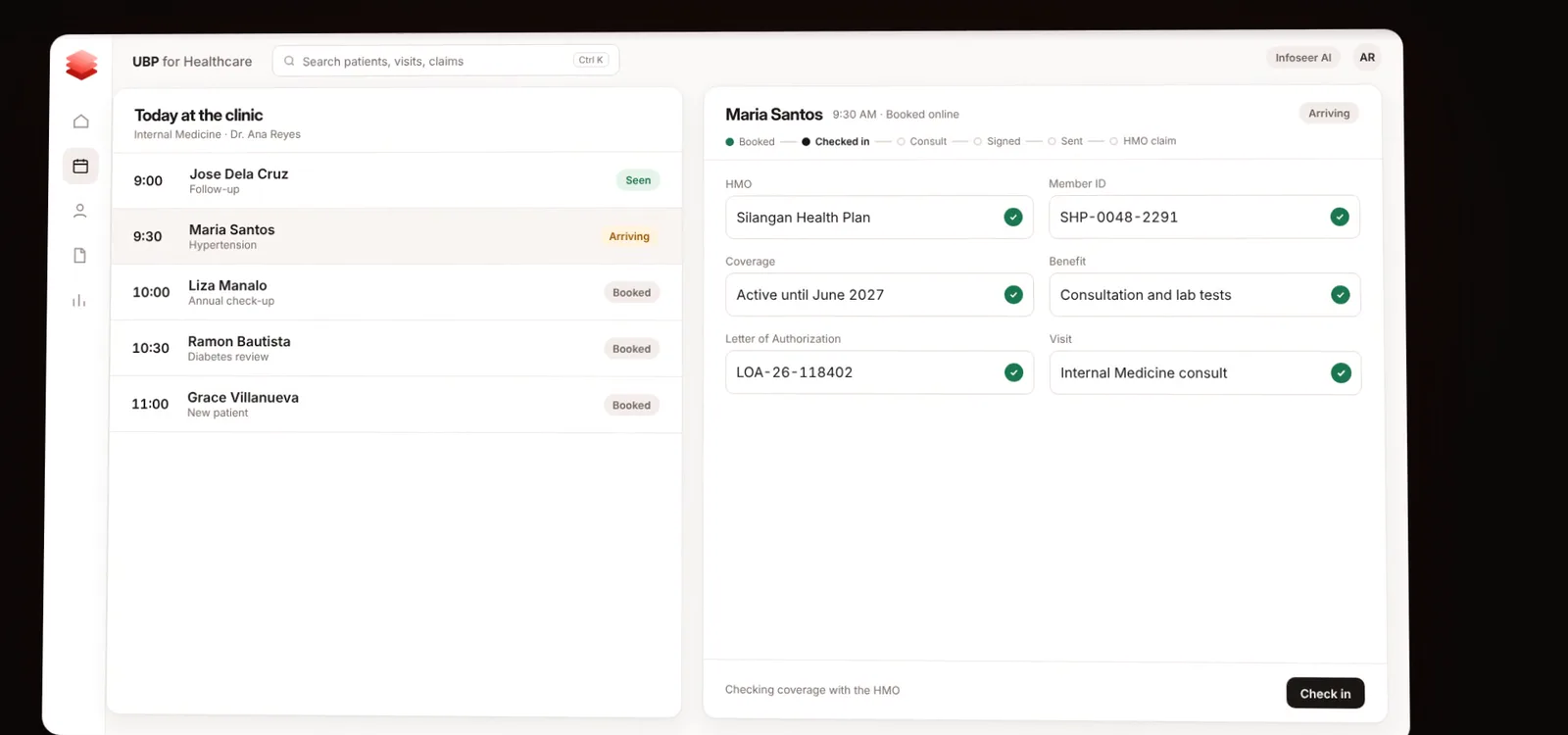
HMO and LOA, checked before the visit.
When a booked patient arrives, the front desk sees her HMO, member ID, coverage, benefit, and letter of authorization already checked, so check-in takes a moment instead of a phone call.
Featured product for outpatient clinics
A doctor's best minutes belong to the patient, not the keyboard. UBP for Healthcare checks the HMO and LOA before the visit, listens to the consultation and drafts the note for the doctor to sign, sends the patient her summary, and prepares the HMO claim.
How it works

When a booked patient arrives, the front desk sees her HMO, member ID, coverage, benefit, and letter of authorization already checked, so check-in takes a moment instead of a phone call.

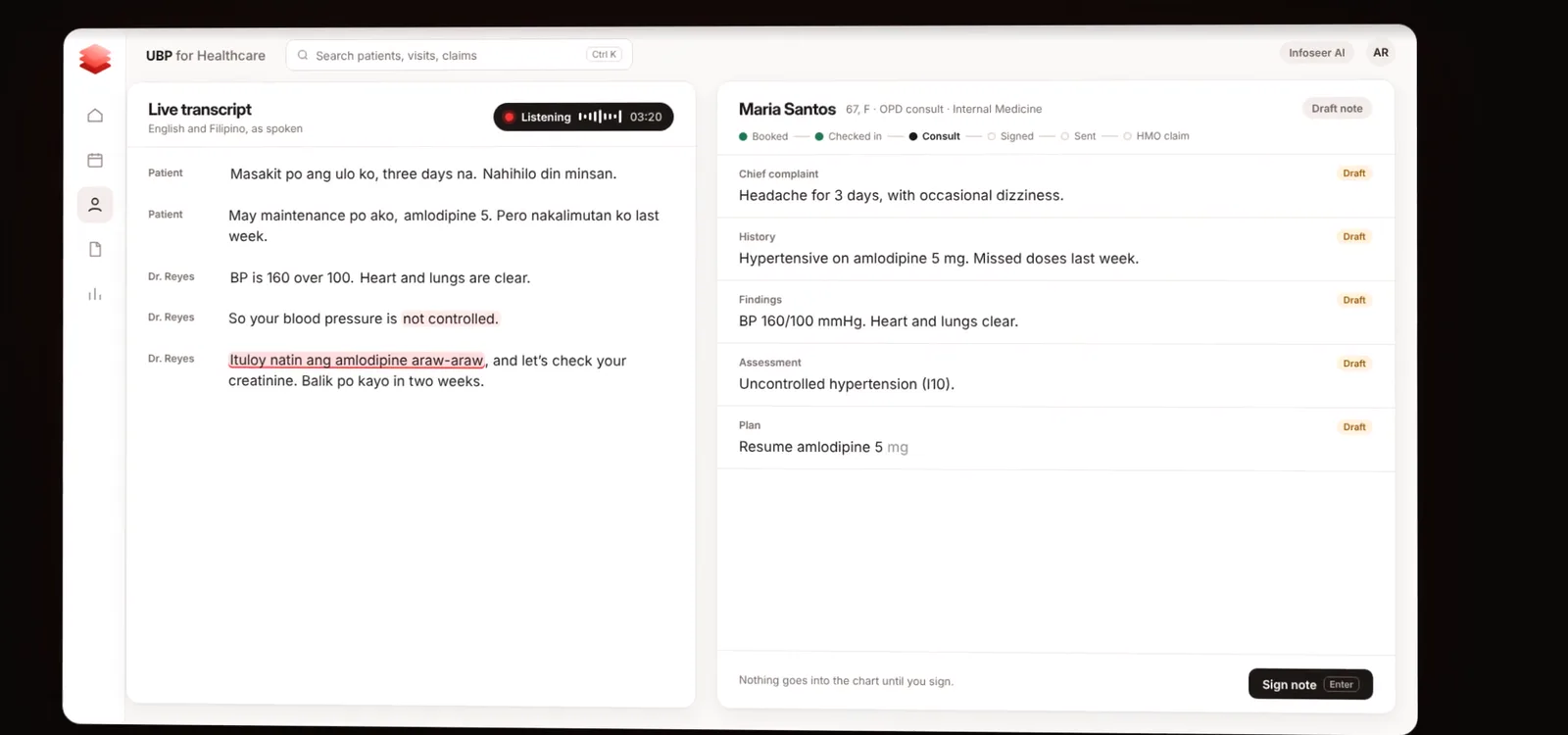
With the patient's consent, Infoseer AI follows the consultation in English, Filipino, or Taglish and drafts a structured note: complaint, history, findings, assessment, and plan. Every line links back to what was said.
Nothing goes into the chart until the doctor reviews the note and signs it.

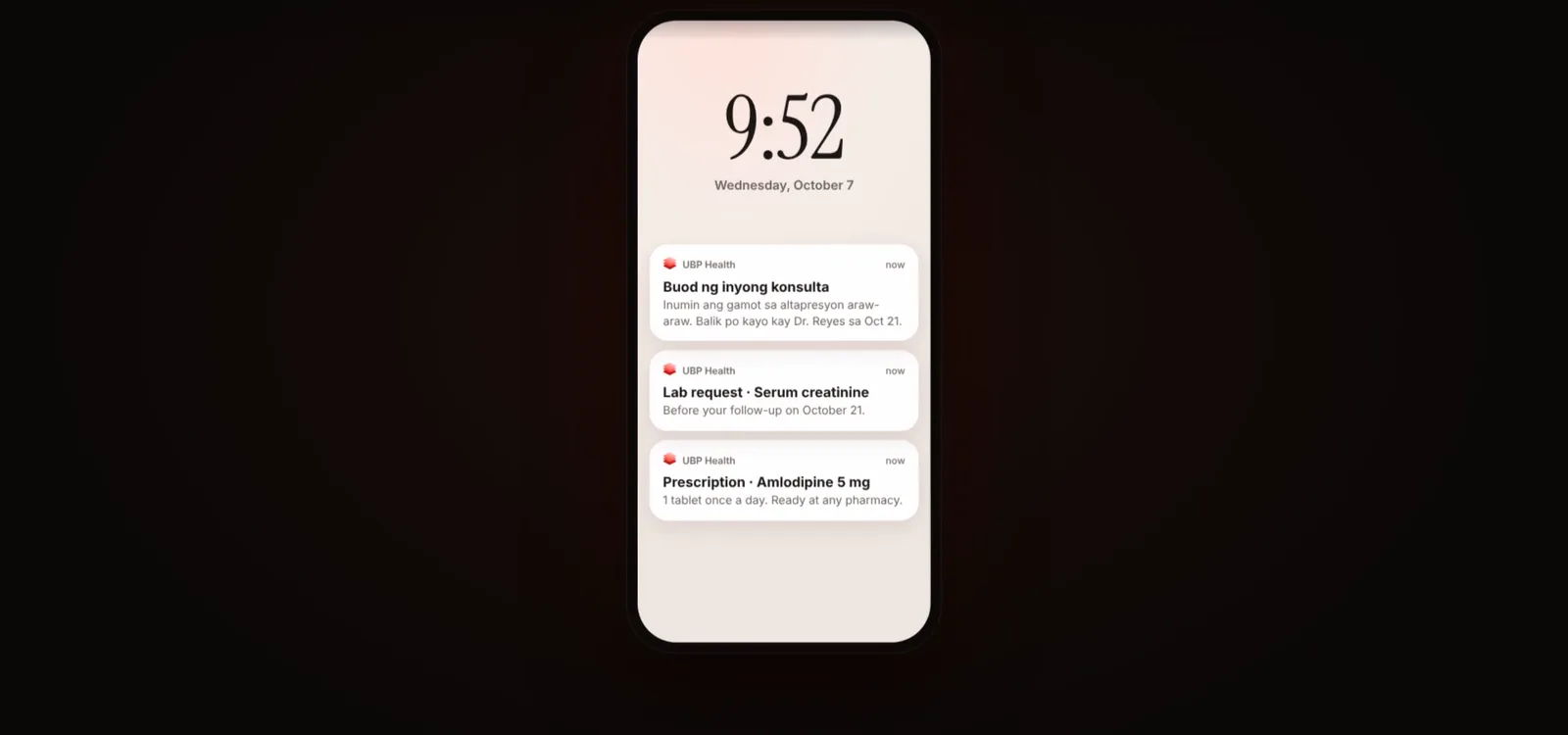
Once the note is signed, the prescription, lab request, and a plain-language visit summary go straight to the patient, in the language she spoke during the visit.

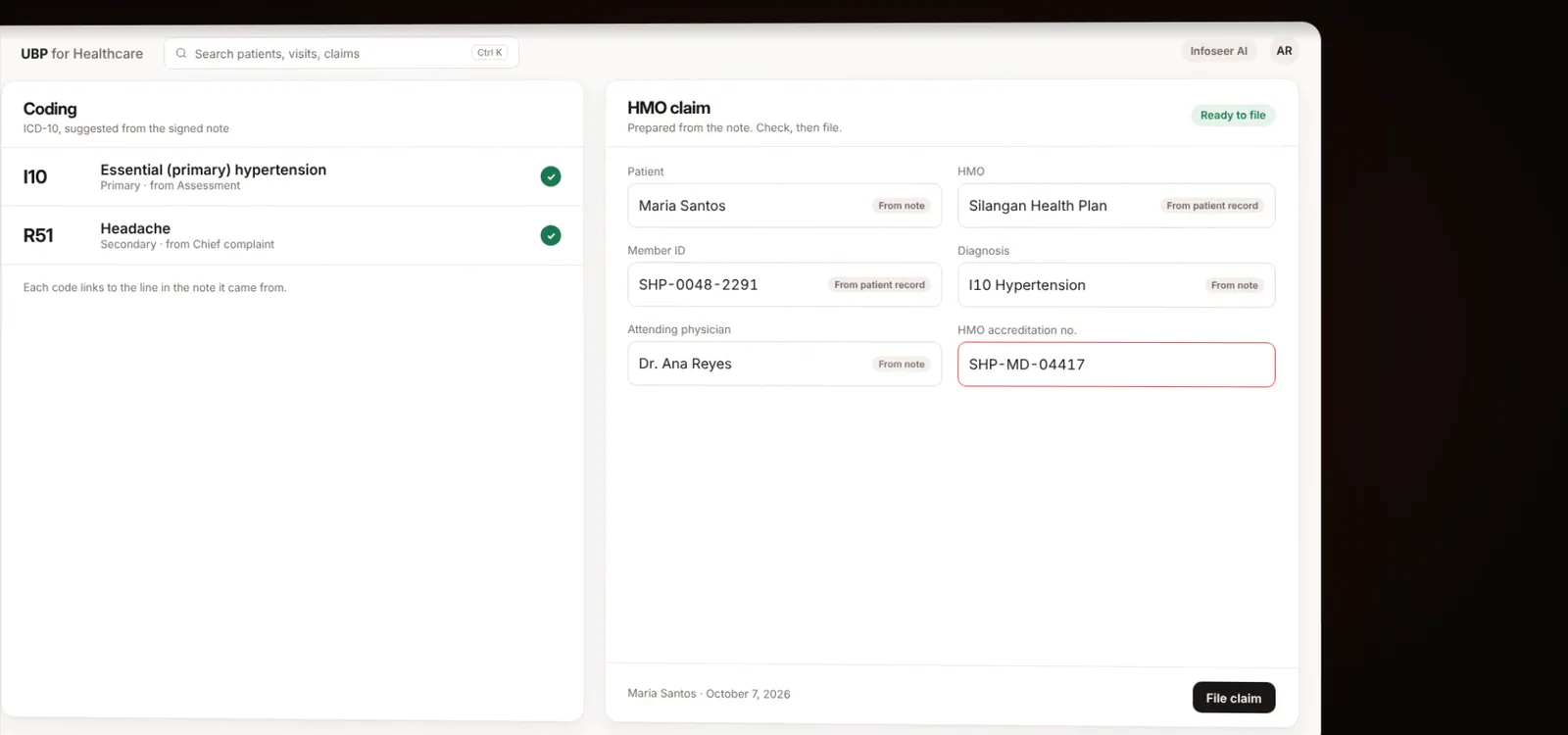
ICD-10 codes are suggested from the signed note, each linked to the line it came from. The HMO claim is filled in from the note and the patient record, and anything missing is flagged before it is filed.
The flow
The foundation
UBP is the framework Infoseer uses to build connected business applications: Microsoft sign-in, roles and approvals, an activity trail, document intelligence, an AI assistant, and connections to the systems a business already runs.
UBP for Healthcare applies it to the outpatient visit, starting with clinics. It is shaped around each clinic's own process, HMOs, and systems rather than delivered as a fixed product.
Tell us how your clinic books, checks in, consults, and files HMO claims, and we will show you how UBP for Healthcare would fit.